

Culture Change in Corrections: Why Reform Starts with People, Not Policy
If you have spent any amount of time in corrections, you have participated in conversations about organizational culture. We discuss it in leadership meetings, strategic planning sessions, accreditation reviews, recruitment efforts, employee surveys, and even around the breakroom water cooler. We analyze it through surveys, assessments, consultants, focus groups, and exit interviews. We identify what is working, what is not, and what we believe needs to change.
When challenges emerge, our first instinct is often to look toward policy. We revise procedures, create new directives, establish committees, or implement additional layers of oversight. While policies are important and necessary in our profession, there is a fundamental truth that many organizations overlook: culture is also a workforce strategy. In a profession defined by staffing shortages, mandatory overtime, fatigue, and increasing competition for talent, the way people experience the organization directly shapes whether they join, stay, grow, or leave.
Culture Is a Workforce Strategy, Not a Side Initiative
That is why culture development must be recognized as a core organizational priority, not a separate initiative operating alongside the real work. It must be understood as part of the agency’s retention strategy, succession strategy, and operational strategy.
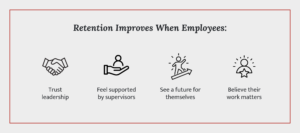
When employees trust leadership, feel supported by supervisors, see a future for themselves, and believe their work matters, retention improves. When they do not, vacancies rise, overtime expands, burnout accelerates, and the organization begins managing instability rather than advancing its mission.
Why Policy Alone Can’t Change Correctional Culture
Culture does not change because a policy changes. Culture changes because people change. Policies provide directions. People provide momentum.
The strongest organizational cultures are not built on what is written in a manual. They are built on what employees experience every day through their interactions with leaders, supervisors, peers, and the organization itself. Culture is something you can feel and sense when you walk into a facility. It is tangible and genuine and cannot be simply transformed by what you write in a policy or profess at a conference.
The correctional profession has always relied heavily upon policy. For good reason. We operate in an environment defined by accountability, liability, constitutional obligations, and public trust. Policies establish consistency and provide safeguards for employees and those in our custody. However, policies alone have never inspired people, developed trust, improved morale, or created engagement. People do those things.
This distinction matters more than ever. Agencies across the country are learning that recruitment alone will not solve workforce instability. Hiring matters, but retention is where strategy proves itself. Bringing people through the door is important. Creating conditions that make them want to build a career is what separates short-term staffing efforts from long-term organizational strength.
If we genuinely want to improve organizational culture, we must focus less on changing documents and more on developing the individuals responsible for bringing those documents to life.
The Reality of Organizational Culture in Corrections: It’s What Staff Experience, Not What Leaders Say
One of the greatest misconceptions about culture is that it exists at the executive level. Leaders often spend considerable time discussing culture while employees actually experience it.
Culture is not what leadership says it is. Culture is what employees believe it is.
An organization may have a mission statement emphasizing teamwork, professionalism, and respect. Yet if employees experience favoritism, poor communication, inconsistency, or a lack of trust, the actual culture will be defined by those experiences rather than the words displayed on the wall.
Retention Metrics Are Culture Metrics
Retention should be viewed as a cultural indicator, not simply HR statistics. Exit data, vacancy rates, overtime usage, sick leave trends, internal transfer patterns, and early-career turnover all tell a story about employee experience. If we are serious about culture, we should be just as serious about reading those signals and treating them as strategic intelligence.
This reality can be uncomfortable for leaders because it requires a level of self-reflection and vulnerability. It is easier to rewrite a policy than it is to examine how our actions may contribute to organizational challenges. It is easier to put a picture on the wall of a department mission, than it is to walk the facility and engage our employees in discussions about how to improve culture.
Credibility Is Currency: Staff Watch Everything Leaders Do
Employees watch everything leaders do. They observe how we respond during crises. They notice how we treat people who disagree with us. They evaluate whether we follow through on commitments. They pay attention to whoever receives opportunities and who do not. They listen carefully to what is said, and even more carefully to what is done. And, most importantly, they talk to each other and share the interactions they had with specific leaders.
In corrections, credibility is currency. Employees quickly determine whether leaders genuinely care about people or simply care about compliance (or worse, themselves). Corrections employees watch to see if their leaders care more about incarcerated individuals than their staff and this is often where organizational culture challenges begin.
Culture is built one interaction at a time, and those interactions must be genuine and frequent. Not just Monday through Friday 9am to 5pm, but all shifts, all areas, and not just with those people who make the leader feel comfortable. It is easy to speak to someone who shares your views, hobbies, and direction. It is more difficult to speak with those outside your comfort zone, but even more critical that you do.
Frontline Supervisors: The Greatest Influence on Correctional Culture and Retention

When discussing culture, many organizations focus exclusively on executive leadership. While executive leaders establish vision and priorities, frontline supervisors often have the greatest impact on culture. Employees may interact with the sheriff, director, or warden only occasionally. They interact with sergeants, lieutenants, corporals, and shift supervisors every day. Those supervisors become the face of the organization, and in most cases the voices our employees hear the most. The closer they are to those performing the work every day, the more influence they have upon them.
A supervisor who communicates effectively, demonstrates empathy, remains accountable, and invests in employee development can positively influence an entire unit or shift. Conversely, a supervisor who lacks these qualities can undermine even the best organizational initiatives. This is why culture change begins with investing in people.
Developing leaders at every level should be viewed as a cultural strategy rather than simply a training requirement.
Promoting Great Operators Isn’t the Same as Developing Leaders
We often promote individuals because they excel operationally. They are knowledgeable, dependable, and technically proficient. Yet leadership requires an entirely different skill set.
The ability to manage incidents is different from the ability to lead people through adversity. The ability to enforce policy is different from the ability to build trust. The ability to make the executive leaders of the organization feel good about themselves is different from the ability to motivate and inspire line level employees to accomplish goals. If culture is profoundly important, then leadership development should be among our highest priorities.
This is especially true when we think about retention. Employees rarely leave an organization because of a mission statement. More often, they leave because of the daily experience created by their immediate environment. Frontline leaders shape scheduling fairness, coaching, accountability, recognition, conflict resolution, and psychological safety. In other words, they shape the conditions that determine whether employees remain committed or begin looking for a way out.
What Supervisor Development Should Include
If agencies want better retention outcomes, they should invest accordingly. Supervisor development should include more than policy knowledge and tactical readiness. It should prepare leaders to:
- conduct meaningful check-ins
- address burnout before it becomes disengagement
- coach performance without eroding dignity
- communicate with emotional intelligence
- build teams where employees believe high standards and support can exist together.
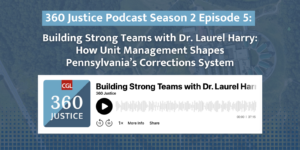
In this insightful episode of the 360 Justice Podcast, host Gary Mohr sits down with Dr. Laurel Harry, Secretary of the Pennsylvania Department of Corrections, to explore the evolution and impact of unit management within the state’s correctional system. Together, they discuss the origins of unit management, how Dr. Harry’s hands-on experience as a Unit Manager shaped her leadership journey, and the best practices that have emerged in Pennsylvania as a result.
Building Trust with Correctional Staff Before Leading Change
Many leaders become frustrated when employees resist organizational change. Innovative programs are introduced, expectations are communicated, and resources are invested, yet participation remains low and skepticism remains high.
The issue is often not the change itself. The issue is trust. People generally support change when they trust the individuals leading it.
Trust cannot be mandated through policy. It must be earned through consistency, transparency, fairness, and genuine concern for others. Employees need to know that leaders are willing to listen before they are willing to follow.
This requires us to move beyond simply gathering feedback and begin demonstrating that feedback matters. If employees identify concerns during surveys, focus groups, or stay interviews, leaders must acknowledge those concerns and communicate what actions will follow. Even when immediate solutions are not possible, honest communication builds credibility.
Stay Interviews and Exit Interviews: Listen Before People Leave
This is where interviews and structured listening become especially valuable. Exit interviews tell us why people left. Stay interviews help us understand why good people are still here and what might cause them to reconsider. That information gives leaders an opportunity to intervene before frustration becomes resignation. Strategically, that is far more effective than waiting to diagnose a problem after talent has already walked out the door.
People do not expect perfection from leadership. They do expect honesty and authenticity. Over time, trust becomes the foundation upon which meaningful culture change can occur.
Creating a Culture of Ownership
Another critical component of cultural transformation is ownership.
Many organizations unintentionally create a culture where employees wait for leadership to solve every problem. While leaders certainly bear responsibility for organizational performance, sustainable improvement occurs when employees feel ownership in the process. Ownership develops when people feel valued, heard, and empowered. It grows when employees are invited to participate in solutions rather than simply comply with decisions. People want to be part of the solution, not part of the problem.
The best organizations recognize that innovation rarely comes exclusively from the executive office. Some of the most effective ideas emerge from those closest to the work. Correctional officers, deputies, support staff, counselors, medical personnel, and civilian employees often possess insights that leadership cannot obtain through reports alone. When leaders actively seek those perspectives and empower employees to help implement solutions, culture begins to shift.
That participation also strengthens retention because it gives employees a greater sense of meaning and influence. People are more likely to remain in organizations where they feel they can shape outcomes, contribute ideas, and solve problems alongside leadership. Ownership turns culture from something employees endure into something they help create.
Employees stop seeing themselves as observers and begin seeing themselves as contributors. That shift is powerful.
Staff Recognition and Wellness as Cultural Tools for Retention
If culture is about people, then recognition should be viewed as one of the most important tools available to leaders. Recognition communicates what an organization values. Unfortunately, many organizations reserve recognition for extraordinary accomplishments while overlooking the consistent daily efforts that keep operations functioning. Recognition should not be viewed as a morale program. It should be viewed as a leadership responsibility.
I’ll say it again – culture improves when people feel seen and heard.
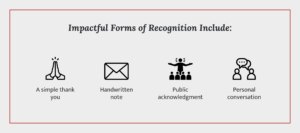
A simple thank you, a handwritten note, public acknowledgment, or a personal conversation can have a significant impact. These actions cost little but often carry tremendous value. However, prepare yourself for the typical corrections employee response, “I was just doing my job.” That very well may be the case, but few professions have the impact and potential liability someone not doing their job can have on the safety and wellbeing of human beings.
It is also a retention strategy. Recognition reinforces belonging, communicates standards, and reminds people that their contributions are not invisible. In high-stress environments like corrections, where the work is often difficult and the public rarely sees its complexity, intentional recognition can counter the sense that effort is expected but never acknowledged.
When employees believe their contributions matter, engagement increases. When engagement increases, performance improves. When performance improves, culture strengthens. The connection is not complicated. People who feel valued are more likely to invest in the success of the organization.
Wellness Is a Retention Strategy, Not a Reward
Any serious retention strategy must also include wellness. In corrections, wellness is not a reward, and it is not separate from performance. Fatigue, trauma exposure, inconsistent schedules, mandatory overtime, and chronic stress all influence decision-making, morale, attendance, and long-term career commitment. If we want employees to stay, we must build environments that support resilience, normalize help-seeking, and reduce avoidable stressors where possible.
The Opportunity for Corrections Leaders: Build the Culture, Keep Your People
The future of corrections will require us to navigate significant challenges. Staffing shortages, evolving public expectations, increasing complexity, and employee wellness concerns are unlikely to disappear anytime soon.
Policies will continue to play a significant role in helping us address these challenges. But policies alone will not create the cultures necessary to thrive. People will.
The opportunity before us is not simply to write better policies. It is to become better leaders, better mentors, better communicators, and better teammates. Culture change begins when leaders choose to invest in people before processes, relationships before regulations, and trust before directives.
It also begins when leaders decide to measure what matters. Agencies should know not only how many positions are vacant, but where turnover is concentrated, which supervisors retain strong teams, when employees are most likely to leave, what burnout is costing in overtime and absenteeism, and whether internal development pathways are producing the next generation of leaders. Strategy requires more than good intentions. It requires disciplined attention to the human factors that drive organizational performance.
The good news is that corrections is already filled with extraordinary people. Every day, dedicated professionals show up to perform arduous work in challenging circumstances. They deserve leaders who recognize that organizational culture is not something we write. It is something we build. And we build it through people.
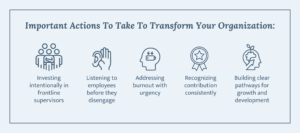
If we genuinely want to transform our organizations, correctional leaders must move beyond talking about culture and begin treating it as a leadership obligation. That means investing intentionally in frontline supervisors, listening to employees before they disengage, addressing burnout with urgency, recognizing contribution consistently, and building clear pathways for growth and development. None of those actions are symbolic. They are strategic choices that shape whether our people stay, whether our teams remain healthy, and whether our organizations are prepared for the future.
The call to action is clear. Correctional leaders should leave this conversation determined to examine the daily employee experience, develop the leaders closest to the workforce, measure the indicators that predict turnover, and make retention a standing leadership priority rather than an occasional concern. The agencies that will be strongest in the years ahead will not be the ones with the most policies. They will be the ones with the courage and discipline to invest in their people, earn their trust, and build cultures that people are proud to serve within.That work cannot wait, because culture change in corrections will always begin with people, not policy.
Download the PDF
Meet the Author