The Journey to ‘Justice with Dignity’: Ashley Burke on Building the New Jackson County Detention Center
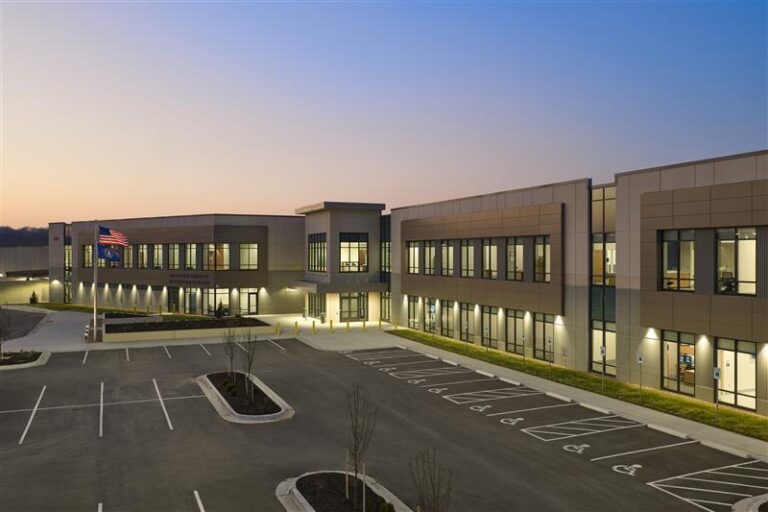
In this episode of the 360 Justice Podcast, host Brian Lee speaks with Special Projects Coordinator Ashley Burke, who served as lead project manager for Jackson County, MO’s new 470,000-square-foot, 1,000-bed detention center. Hear her experience helping the county with the transition and activation of the new detention center. She highlights the behind-the-scenes collaboration among corrections, the sheriff, courts, prosecutor, maintenance, and county leadership, and how “justice with dignity” shaped decisions like calming colors, murals, natural light, courtyards, acoustics, and staff spaces. Burke explains why the county replaced its 1984 jail after years of studies citing overcrowding, deferred maintenance, and outdated design, and how COVID-era inflation drove the budget from $256 million to about $330 million and reduced the plan from 1,200 to 1,000 beds. Listeners will hear real-world lessons on codes, road work, concrete-floor fixes, and transition planning amid staffing shortages, plus Burke’s candid advice to plan bigger and think beyond “it’s just a jail”—a must-listen for leaders planning their next facility.
Subscribe to Our Podcast
Our 360 Justice Podcast is available on the following platforms:




Meet Our Guests

Ashley Burke
With a background spanning politics, public administration, and large-scale infrastructure, Ashley Burke brings a unique, insider perspective to the criminal justice system. A graduate of Benedictine College, Ashley began her career working on state political campaigns before serving in roles for a State Representative, State Senator, and a member of Congress. She later transitioned to county government, working in the County Executive’s Office alongside the County Administrator, before moving into Public Works. There, she has served as the lead project manager for the construction of a 1,000-bed detention center—currently one of the largest of its kind being built in the United States.
In addition to overseeing the project, Ashley has acted as the lead liaison between the Department of Corrections, contractors, and elected officials, and played a key role as Lead Transition Coordinator, helping guide operational planning for the new facility. Her work sits at the intersection of policy, infrastructure, and corrections—offering a rare, behind-the-scenes look at how justice systems are built and reformed.
Podcast Transcript
Brian Lee: Hello, everybody, and welcome to the 360 Justice Podcast. I’m your host, Brian Lee. We’re really looking forward to speaking with today’s guest, Ashley Burke. Ashley, thanks for being with us today.
Ashley Burke: Yeah, thanks, Brian. Thanks for having me.
Brian Lee: So, a little bit of a background on Ashley Burke. With a background spanning politics, public administration, and large-scale infrastructure, Ashley brings a unique insider perspective to the criminal justice system.
She’s a graduate of Benedictine College. Ashley began her career working on state political campaigns before serving in roles for a state representative, state senator, and even a member of Congress. She later transitioned to the county government working in the county executive’s office alongside the county administrator before moving to public works.
There, she served as the lead project manager for the construction of a 1000-bed detention center, currently one of the largest of its kind being built in the United States. Awesome. Like I said, great having you on, [00:01:00] Ashley. And for our listeners, you should know that I’m working directly with Ashley on the project right now, so we work together quite often.
And I asked Ashley to come on the podcast today to talk to us about the project because one of the things that’s so unique here, Ashley you’ve been one of the few over the past several years that’s actually been able to see a project like this of this magnitude from start to finish. Now a lot of jurisdictions across the country have been trying to get this done.
They’ve been trying to plan such a facility, but unfortunately, COVID hit and that really put the brakes on a lot of people’s plans to do this. You all have been very fortunate to get this done, and I know COVID came right in the middle of your project too. So just to familiarize our listeners with what the project was all about, can you talk a little bit, give us an overview of the project, how it came to be, why it came to fruition, what the need for the building was, and maybe a little bit about the building itself?
Ashley Burke: So, our current facility was open in 1984, and it quickly [00:02:00] faced many problems including overcrowding, a lot of deferred maintenance, and outdated design almost as soon as it opened. So, the design was just not consistent with contemporary standards and impaired safety and secure facility for our operations, our corrections officers, and even our maintenance staff.
So, the county, I believe in 2019, or even earlier, actually, so we did multiple studies. So, we had a jail task force in 2015, 2018. There was a grand jury report, a facility assessment report, a criminal justice assessment. So, we did a lot of reports over the span of five years on just the building in general and what our next steps were.
I think in 2019, I wasn’t quite involved in the project at time, they started really looking at building the new jail after the last report came out. So, they created a steering committee that included all of our elected officials or a representation from each office, basically, here in the county and they decided the new jail was the next step.
It would’ve [00:03:00] cost more for us to renovate our current facility rather than just building one. Of course, we came up with a budget, a bed number, and then COVID hit, and that took our budget of 256 million and went to, I think, 330 million almost overnight from inflation. So we had to really rethink a lot of things on what our priorities were and the bed count is what took a bigger hit with some of that.
So, we went from, I think, a 1200-bed facility down to a thousand beds and that was a lot due to COVID.
Brian Lee: Yeah, absolutely. So, you mentioned the steering committee, and that’s interesting. And one of the things I like to delve into a little bit, can you tell us how important it was to collaborate with other departments within the criminal justice system and the county?
I know a lot of people sometimes who are thinking about taking on this type of a project, they see it as a very straightforward [00:04:00] process. Well, it’s a jail. It’s designed to contain people and hold them in. So why do we need all of these different levels of planning and involvement? What did you learn from this process about how important that collaboration was?
Ashley Burke: So, the facility is not just for corrections, I guess I wanna say. Our building has multiple people that are staffed in that building. So, the county, of the county executive’s office, the county as a whole is who runs the building, so that’s the county, then our maintenance staff is who maintains the building.
And then the corrections department is who operates the building. Our sheriff’s office oversees that, and then we actually have two courtrooms inside the building, so then the courts are also involved in that. There were a lot of players, and I thought it was important, myself, and the county as a whole thought it was important that everybody was involved in the decisions and design so that it was able to be [00:05:00] operated efficiently for everybody.
With the courts, we also have our prosecutor. So that was another member that was involved as well in the decisions.
Brian Lee: Yeah, I think that can be a double-edged sword sometimes too, because we understand how important it is to have all of that collaboration.
Ashley Burke: Mm-hmm.
Brian Lee: But like with anything else on a project, the more people you bring in, the more difficult it is to get consensus on something and to get- Yeah. … everybody to agree. So I, I don’t know if you experienced that yourself and how you came to those consensuses, but do you have any input on that as far as might be helpful to people getting ready to embark on a similar process?
Ashley Burke: So I wasn’t necessarily involved with the steering committee. That was before I became in my role, but I know that, of course, it was challenging, getting everybody on the same page. But at some point, everybody got on the same page. They started to agree, collaborating.
It’s a little bit of a give and take. So, I think our steering community did a great job at that, just to get the [00:06:00] jail through the starting line. And then to get over the finish line, I worked with all of those individuals and the groups as well to just make sure their ideas and their thoughts were voiced and heard.
I do think it’s very important that I’m not an expert on how corrections runs things. So, you know, I spoke with corrections officers frequently and our staff on what best practices were for them or I went to you know, yourself on what the best practices were that you were seeing across the country and listening to those ideas and not just thinking, “It’s my way or the highway.”
So it’s in all of those things, –
Brian Lee: Yeah. …
Ashley Burke: the prosecutor, how do you wanna function, or the courts, like, what’s something that your courtrooms don’t have that you wish you had currently? Yeah. So I think myself and then our project team did a great job of going and just listening.
And that was a pretty big focus throughout the entire project was just sitting and listening and taking in ideas that I could then take to our general contractor architect and see if we [00:07:00] can get those in place for them.
Brian Lee: Yeah, a lot to think about in this type of project.
For those that might not be aware, this is a 470,000 square foot building.
And like you mentioned, it’s a thousand bed facility. That’s a huge project. That’s a massive undertaking. When you came in, I know you’d mentioned you weren’t intimately familiar with corrections, but what were your thoughts when you came in about this scope of work and what your role was in that?
How did you attack that?
Ashley Burke: Well, not even was I not super familiar with corrections, I wasn’t super familiar with construction. My background was politics and then I got wrapped up into this project just a little history on how we selected our site. It was at the time a mobile home park that the county bought the land so I was volunteered to help with the relocation of those families.
So I relocated 107 families, and then after that project was done, I looked at my boss and I said, “Okay, well, now what do you want me to [00:08:00] do? What project can I do next?” And he was like, “You know what? I think you’d be great doing project management.” So I was like, “Okay, I don’t know anything about construction or project management, but I will learn.”
… So luckily I was surrounded by really smart people and I just took in all that information and listened and learned over the last four years and figured it out. So going into the project, I didn’t know what I was walking into. I just took it day by day. I think it’s hard to grasp such a large project, even, especially as my first one.
So yeah, you just take it day by day, room by room, door by door, I guess.
Brian Lee: Yeah, I think the ability and your ability to have those types of leadership skills, like you said not knowing going into this, what it entails to be able to listen to other people and seek other people’s advice.
I think that is important because I think a lot of people do [00:09:00] come into this process and they think they understand just as an example, you say, “I don’t really know about construction. All I know about is politics.” I think people that have gone through this process might find that the politics are even more important in this process than the construction is.
Just the example that you provided about having to move all of those residents out of their homes, where they were, that there’s a lot of politics. And, the people that you’re working for on this project, they have to answer to those people, constituents and whatnot. So I think that was a unique skillset that you brought to the table here that was very important to the project.
And again, the sign of a great leader is being able to surround yourself with people that do have the knowledge and being able to listen to , that knowledge and take that in. How has your perspective changed about the criminal justice system and corrections since this process?
I know you and I personally, we actually had the opportunity to travel together to look at some of the other justice systems out there. And I think you even came to me and you had an [00:10:00] interest in we talked about strategic inmate management and things like that. So can you talk a little bit about how your perspective of the justice system evolved through this process?
Ashley Burke: Sure. I don’t wanna say I never had a negative thought about corrections. I’ve always known that corrections has a very hard job. I think you see the movies or see TV shows and you see it’s cold and rough and people are being mistreated and X, Y, and Z. And that’s not to say that doesn’t happen, but I look at like the people that work at the county and they’re going and they’re wanting to do their jobs well and they wanna treat people with respect and, you can see, like you took me, we went to down to Georgia and you can just see that the corrections is moving in a more forward, positive direction.
Brian Lee: I know you were very intimately involved in a lot of the interior design decisions, like-
Ashley Burke: mm-hmm. …
Brian Lee: colors, murals, [00:11:00] and things like that. And I think those things, people may not understand or realize that that has a huge role in what you were just talking about.
I know we’ve talked about justice with dignity as it relates to your facility, and now you, you have a very cutting edge facility where all of those things kind of show through in that design and what was constructed.
So as you were involved in that process, can you just walk us through what some of those decisions were and how you went about making those decisions? ‘Cause it turned out really well. The facility looks great.
Ashley Burke: Well, thanks. Yeah. Our steering committee, they chose the theme and justice with dignity, so I really kept that at the forefront of my mind every day through every decision that was made.
You know, interior design, the colors weren’t just … it wasn’t just for aesthetics. I wanted it to be calming and have a purpose. Color helps regulates mood. So we did a lot of soft colors. It’s a lot of blues, whites, [00:12:00] grays throughout the entire facility.
And then we have murals in each dayroom. So every day room is the same color, but the murals are different so that it personalizes that day room. And then it also helps our officers orientate themselves, like, where they’re at in the building, which day room they’re in since it’s not multiple different colors.
There’s a lot of natural light. … We have a handful of courtyards throughout the building. They’re not necessarily accessible to staff or inmates, but they bring in a lot of natural light. There are plants in those courtyards that bring nature into the building.
Our staff, they are there 12 plus hours a day. They probably spend more time in the building than they do at home some weeks. So I wanted it to … I wanted them to come in and have a place that they could be proud to walk into every day and get some fresh air. You know, we do have a staff courtyard inside the perimeter that allows them to go eat lunch [00:13:00] outside and get some fresh air, and I think that’s important for our staff.
And then inmates are able to see sunlight. I think that helps with mood. Acoustic panels, there’s acoustical panels throughout the entire building, wide hallways, taller ceilings. I think there’s studies that show that the loud noises thats what really aggravates people. So we focused on that as well.
So every decision that I was faced with, I had that justice with dignity at the forefront of my mind.
Brian Lee: Yeah. I’m chuckling to myself- … Because I’m just, I’m thinking back throughout the project and … I think people who are used to the traditional construction projects, like maybe the contractors on site probably aren’t as used to having to spend as much time on those finer details of what color the murals are gonna be or the walls.
People probably don’t think in that regard when they’re talking about a jail. And I’m sure to some people [00:14:00] on this project that was maybe a little annoying or frustrating, but I’m chuckling to myself because you took those decisions very seriously in this project and you put a lot of thought into them.
And I’m glad you did, because like you said, that, that is a place for the next 50 years that a lot of people are gonna be spending a lot of time, employees, people that are being held there and all that. So I think it really is an important decision. And we, we want a project to go smoothly and to be quick or whatever, but sometimes we have to stop and think about those things and not just get onto the next project.
So I applaud you for that. And sometimes there were, situations there where things had to be redone because they weren’t right and things like that, but-
Ashley Burke: Yeah. …
Brian Lee: I think it shows very well in the facility.
Ashley Burke: Yeah. I had many comments from contractors that would … I would … I’m a nitpicker.
I will be honest, I’ll be the first one to go around and point and be like, “That’s not right.” And they would go, “Ashley, it’s just a jail.” Like, why are you so worried about [00:15:00] that? And I’m like, it is not just a jail. This is where our county staff comes in and spends a lot of their lives in.
Brian Lee: Yeah.
Ashley Burke: So yeah, we’re detaining people for their crimes, but it’s not just about them it’s the people that work here.
It’s that full circle of just treat people how you wanna be treated, and it’s not just a jail at the end of day.
Brian Lee: Yeah, absolutely. No, I’m glad you said that and you brought that up because a lot of people say that it’s just a jail. And predominantly, that gets talked about when there’s time to make funding decisions, and how much money are we gonna spend on this? And rightfully we’re stewards of the public, the public’s money, and we wanna be responsible with that, but I think there’s also a thought process, and a lot of people believe how a society treats its incarcerated and how they treat their prisoners is a direct reflection of that society.
And, being thoughtful in that regard, what can we do [00:16:00] to help these folks to- to improve their outcomes as they go through this process? You’re really doing something for your community instead of just kinda kicking that can down the road. So you’re really contributing to that a lot.
So I thank you for doing that and taking that job so seriously. For those that are listening, if you ever have the opportunity to go visit the Jackson County Detention Center, one of the first things you notice when you walk into that secured area is that big courtyard area- and there’s some of those in employee break rooms and stuff like that. It’s very impressive.
So you spent a lot of your time on the construction site monitoring the progress and addressing issues in real time as they happen. Can you share a moment or a challenge that came up during that process that really tested your team and how you got through that process?
Ashley Burke: Yeah. I was thinking about this. I’ve been thinking about this for just a few weeks and months now that the projects came to an end because now that the project’s over, everything I think of is just, like, all the good things, you know?
You ignore all the bad [00:17:00] things. But, I think our price sky rocketing from inflation during COVID was a huge challenge. We had to widen a road that’s right outside the building, that was quite the challenge, having to work with the state.
But there’s lots of little things, like the code world, just like building codes, not really working with how corrections operates a building. Codes are like, “Well, you can’t lock this door. You need to have egress.” And it’s like, well, we don’t want egress,
Brian Lee: Right.
Ashley Burke: that defeats the purpose of this secure building.” So, like, all of those small things were big challenges, but, those codes, – we were lucky to work with our inspector on them and work through issues and then corrections, working with them and finding ways we can get around the building codes or the codes could work for us rather than us working against them.
So again, just going back to that collaboration and teamwork. Our floors were a huge problem for us. We have concrete floors, and there were some day rooms that the [00:18:00] floors just looked awful. Apparently there’s a new concrete mixture and how it dries, it didn’t dry the way our contractors thought it was supposed to.
So that was a very tough spot for us.
Brian Lee: It was a challenge, wasn’t it?
Ashley Burke: Yes. And it’s, it goes back to the thing. It’s like, well, they’re just concrete floors, why does it matter if they look good or bad? … It’s a jail. And again, it’s, it’s not just a jail.
This is where our staff comes every day. And we’re not just gonna put people in these awful spaces where they’re having to live. So, we were lucky we had wonderful contractors that worked with us to help figure out a solution for the floors. So that’s what we were able to do.
We really get the floors fixed. We ground them down. Now they look amazing. It costs us a little bit, but again, our contractors worked with us on the price and sharing that cost. So yeah, it was just teamwork-
Brian Lee: Yeah. Yeah. …
Ashley Burke: throughout the whole [00:19:00] project.
Brian Lee: And that’s a great lead-in too. I know you were on that site every day. It’s essentially where you’ve lived for the last couple of years. And I’m out there recently in the last year, once a month and spending time with you.
And I understand you have a great relationship with contractors and you have a great relationship with everybody on that site. There’s times when I’ve walked that site with you, there’s hundreds of guys working on the site, and they all know who you are.
They know you by name and you know who they are. I’ve seen you walk around and ask them questions about their family or a hunting trip or something like that … Man, she knows all of these people. And- I wondered if you could talk about that a little bit, how important that relationship is because at the end of the day, we’re all trying to accomplish something and we wanna do that.
Everybody wants to complete that project and they wanna be proud of the project. They wanna feel like they’ve benefited… and everybody got what they needed out of the project. So how did you [00:20:00] learn to enable that during that process and building those relationships?
Ashley Burke: Well, I think my politics background helped with a little bit of that.
But yeah, I think it’s important to create relationships with people from the top to the bottom. I don’t think it really matters. Again, I didn’t have much construction or I didn’t have any construction background and I wanted to learn, so who or where better than on the site.
I would go down, I would talk to the electricians, I would ask them what they’re doing and how they’re doing it, why they’re doing certain things. Carpentry, you know, why are you building it this way? Why wouldn’t you do it this way? I just started talking to people and making connections.
And then I feel like when they know that the owner is on site every day and sees me walking around, they take a little bit more ownership and pride in their work. I don’t think people are told thank you enough. I really wanted to go out of my way and let them know how much I appreciated them working on this [00:21:00] project and how great some of it, “Hey that door looks great today or it’s, that paint is really good.
I love this color, I know I picked them, but you did a great job doing this,” or whatever it was, or, “Hey, thank you so much for going above and beyond and doing this for me. I know it wasn’t necessarily what was really asked of you, but I just want you to know I appreciate that you did this, so I appreciate that you worked overtime.”
I think that just goes a long way, and it just gives people pride in the work. Everybody likes to be told thank you… or you’re doing a great job. I just wanted, again, I want people to tell me that I’m doing a great job, and so why not go and start it, treat people the way you wanna be treated?
.. And I also just love talking to people and knowing their lives and getting to know them. So I think that helped as well.
Brian Lee: Yeah. Definitely. I see where you’re coming from and I think personality and those relationships are a huge part. And I’ll go back to what I said before.
You said I didn’t have any construction experience, I had political experience, and I think that might’ve [00:22:00] been more valuable in this process for you. Yeah. And now you have both. You have the construction experience and you still have that political experience and you’ve built those relationships.
And I think also the thing that I noticed on this project is your contractor was a local hometown company as well. I think there’s also that thing going there where there’s a lot of pride in a local project … with all the local people working on it. It’s the heart of Kansas City down there where they’re based out of.
So that was really neat to see from my perspective as well as how you all were working together and taking such pride in that building. So you guys did a great job there. … a facility is one thing and, there’s very specific end dates and there’s schedules to be followed and people know what is entailing as far as building something when it’s started and when it’s finished.
But we’re talking about the fact that not only is this not just some type of office building that, you’re moving people in, they’re gonna continue on. This is a jail facility that’s gonna be [00:23:00] housing courts. It’s gonna be housing offenders, all different departments and things like that.
You also, you were dual rolled on this project. You were the lead transition coordinator as far as developing that transition plan getting the corrections folks in there, the courts folks, understanding how that process is gonna happen. And although the facility hasn’t gone fully operationally yet, it’s gonna be happening fairly soon, I think.
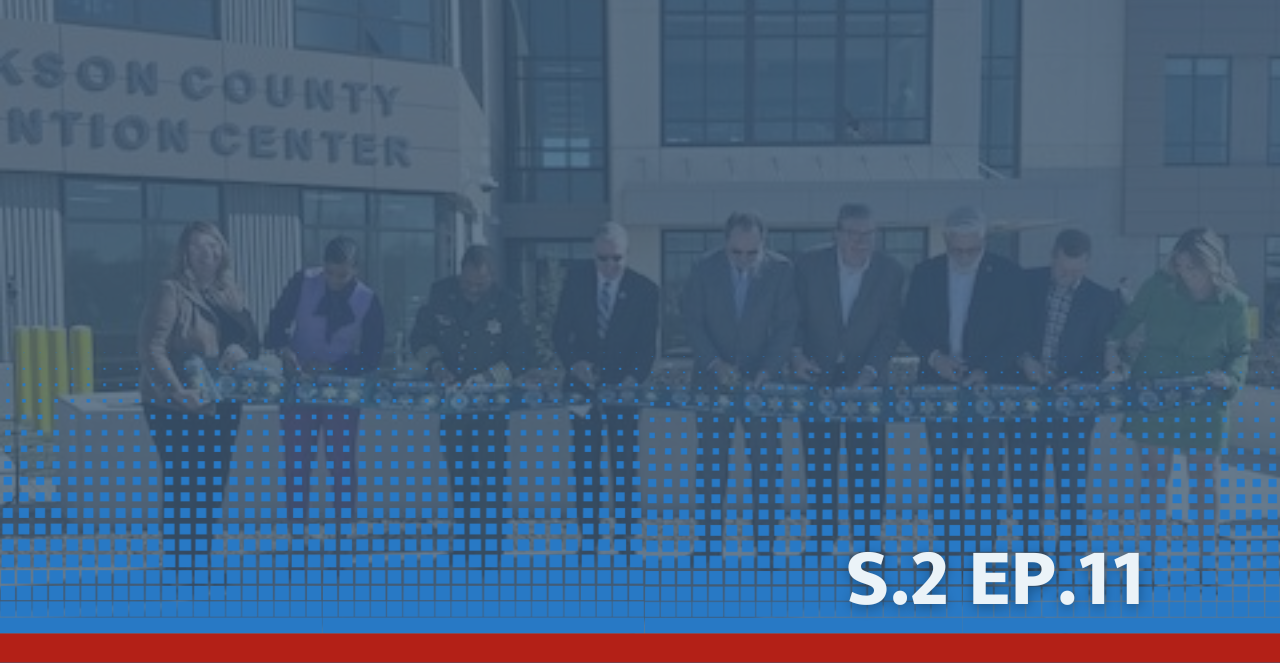
We cut the ribbon on it a couple weeks ago. Things are coming along. Can you talk a- a little bit about what goes into that process and how involved it is? In other words, is that something you can think about in the last 30 days of construction, how we’re gonna transition to this building or talk about how involved that process is?
Ashley Burke: Yeah. I think we started working on transition probably a year ago. And yeah, we just start, started collecting team members on the transition team. So, we have … I think we started [00:24:00] off with three or four from corrections, and they were the ones that really led the charge. I was kinda just the one that helped organize the people and the teams meetings and the actual in- person meetings, and just kinda making sure they were getting the information they needed from our owner’s reps and the construction side.
Brian Lee: You’re talking a little bit about how, you just coordinated the meetings and you just got people together.
That’s a huge, that’s the most important thing. Yeah. And I think if you were to give advice to people that were planning this process, I think you would probably agree with me that you wanna make sure that people are in and part of that process early on. You alluded to the fact that, we started out with a certain number of people and over time it built up.
And that-that’s a question I get a lot on transition activation. I think people don’t understand the level of commitment there, but also the fact [00:25:00] that it gradually builds over time.
You, you wanna get in there early, but also, you will start to determine along the way where we are and how far we need to go. And so I think having that transition coordinator, such as yourself, actually scheduling the meetings and creating those action items and making sure people are showing up with-
Ashley Burke: Stay on task.
Brian Lee: Yeah, those conversations are- … are super important there. And I don’t know from that perspective as somebody that doesn’t have the corrections experience, I think that could actually be beneficial in the, in this process. But looking back at that transition process, is there anything you would’ve done differently or anything you would’ve emphasized more on to help the team be ready that you can think of?
Ashley Burke: Yeah, I think the biggest struggle with our team, and it wasn’t anybody’s fault, is just having somebody solely for transition. [00:26:00] Unfortunately, I think it’s an industry-wide thing, but our facility is very understaffed, so our transition team with corrections were just stretched very thin.
We have one gentleman who does four jobs in the building, and that’s not including the transition. So it just … I think it would’ve been important if we could’ve had one person from corrections that was solely focused on transition. Unfortunately, we weren’t able to have that just because of our staffing, and the gentlemen that were on our transition team did the absolute best job they could do.
Corrections in general is a stressful career, doing their normal day-to-day jobs on top of figuring out transition was probably a lot for them but they did a wonderful job. We are moving ahead. I think they always say “In corrections, when something comes up, you just figure it out.”
Brian Lee: Yeah.
Ashley Burke: [00:27:00] That’s what they’ve done for the last year is they figured it out with the resources that they have, and I think they’ve done a great job so far. We do transition soon so I think it’ll go smooth.
Brian Lee: Yeah. And I think that’s a common theme that’s not unique to Jackson County.
It’s unfortunate, across the country, both law enforcement and correctional staff and such, they’re all spread very thin. And as much as we try to stress on the need for those transition team members, unfortunately, they’re trying to put out the fires that are right in front of them right now.
And when you talk … about this mythical facility that’s gonna be built two years from now, people are going, “Great. We’ll talk about that in two years from now, but unfortunately, I’ve got something I gotta deal with today.”
So I think that’s the sound advice though that you gave there is, instead of focusing on how many people do we need throughout this process, let’s, in the beginning, focus on one person, right?
Let’s focus [00:28:00] on one person that has the ear of the agency administrator that has some decision-making authority that we know- … hopefully is gonna remain employed throughout the duration of the project to maintain that consistency and, after they have that involvement, they can determine how much more they need to staff up to make this happen.
But at the end of the day, that’s what it’s all about for corrections. We just gotta do what we gotta do to get it done. Yeah. And they’re gonna get it done. For everything we do, you can turn around and look back and go, “Oh, it would’ve made more sense to do this or that, but that’s just the nature of the game.”
And … you guys actually did a really good job and you had a good relationship with the corrections folks. And as spread thin as they are and they were, they did get out on site quite often and so it was good for you to build that and pretty consistent with the group of people too.
Ashley Burke: Yeah.
Brian Lee: So-
Ashley Burke: And I think what was important was I, throughout the [00:29:00] entire project, was always an open door. Anytime corrections wanted to come out on site and look at the building or walk the building, they always had that opportunity and I welcomed it because they see things that me as someone that’s not in corrections wouldn’t see, whether it was a camera location or, no, this door should be locked this way, we were able to catch those things early on-
Brian Lee: Yeah.
Ashley Burke: and get those fixed there on site and not have them coming back to me now in the ninth hour and be like … “Hey, by the way these doors aren’t right. We can’t open with this door like this. ” So that was helpful. We were able to get those things corrected pretty quickly because they were out there all the time.
Anything that might’ve affected their operations, I went to them and asked this transition team, like, “Hey, this is what’s coming. Is this gonna work for you? If not what are some options?”
Brian Lee: Yeah. No, I think that’s important, and you guys did a really good job on that. And [00:30:00] from all of these projects that I’ve been a part of, I think no matter how many people you have dedicated, how much planning you do, you’re always gonna have some of that, right?
You’re always gonna have things that don’t go exactly correctly in the process. You’re gonna have changes and things that need to be modified. So the less of that, the better. And obviously the more resources and dedication you have to that makes it a little bit easier, but you guys did a really good job, especially with the resources that you had.
So- … imagine how great that would’ve been if you did have somebody dedicated throughout that whole entire process.
Ashley Burke: Yeah.
Brian Lee: For county municipal leaders boards of commissioners, boards of supervisors, county councils and things like that, there’s a lot of desire across the country, people are looking at building a new facility, a new correctional facility or hybrid facilities that serve functions, deflection, diversion, corrections, the way that the industry is [00:31:00] going. A lot of people have a lot of questions, and for the most part, those folks, much like you and your career, will do this one time in their career.
So looking back on this project and some of the pain points and things that went well, things that didn’t go well, what advice would you have for those level of decision makers that are thinking about taking on this process?
Ashley Burke: Well, I would this might be a little controversial, but I would plan for bigger than what expected. I think, it’s not a secret that we’re gonna open and we’re gonna be overcrowded. Yeah. So unfortunately, because of that budget, we had to go smaller and now it’s biting us in the butt.
Brian Lee: Yeah.
Ashley Burke: Yeah. And I know there’s other cities across the country that are getting ready to make those same decisions. So I would plan for bigger because you’re gonna need that space at some point, even if it’s 5-10 years down the line, at least [00:32:00] then you’re not scrambling.
Brian Lee: Yeah.
Ashley Burke: Being collaborative, listening to each other and ideas, thinking outside the box, I think a lot of times you heard, “Well, this is how we’re doing things currently.” And it’s like, okay, well, this is your chance to think outside of the box. Go and be forward thinking on what’s next in criminal justice, what’s next in detention centers, this is your chance to make those changes.
This is your chance to get a start over new. So really thinking over the box and just on the political side, just putting your ego aside, you know- Yeah. … a lot of times you just need to think about the big picture and this isn’t your personal project. This is the betterment of your entire community.
So put your ego aside for the betterment of your community and the people… that will be staffed there or live there or have to enter there in some of the hardest moments of their lives, whether it’s family or the [00:33:00] actual inmate, and think about what’s best for those people in that building in and out every day.
Brian Lee: Wow. Very well said, Ashley. One of the things you talked about, plan for bigger because you’re gonna need it.
The interesting thing is what you guys did do well is there is plan for expansion, right? So you have. … expansion in that facility. So there is the ability, it’s not, we decided this is gonna be it and we’re never gonna go bigger. Like you said, budgets dictate a lot of times.
That’s important. But I think in my own personal perspective, your local community there, and I see this a lot in the projects very early on in the process, it’s easy for decision makers, elected officials, department heads and things to say, “By the time this thing is gonna be complete, we will be doing it this way, and we will have reduced our population, and we will have implemented these things.”
I think it’s very easy to say that when you know a project’s four or five years [00:34:00] out-
Ashley Burke: Yeah. …
Brian Lee: but eventually, it’s gonna be four or five years later, and you’re gonna be opening that facility, and you have to look back and say, “Okay, we proclaimed that we were gonna do this. What did we do to actually make that happen?”
And I think that, that completion date sneaks up on you. Would you agree with that?
Ashley Burke: Yeah. And then, and you don’t know what’s gonna happen in the world in five years. If we would’ve started in, 2018 and we opened in 2020 and then COVID hit and you’re like, “Oh my gosh, where do we put all these people to keep them safe and spread out?
And we don’t have that room just because this is what we built it for. There’s no room for us to move people around-
Brian Lee: Yeah.
Ashley Burke: or spread out more.” Yeah. So I think you just plan for the unexpected. Hopefully you never have to use those beds, but if you need them, they’re there.
Brian Lee: Yeah. I also think as I’m thinking back on the project and with many of the other projects that I’m working on, I think it also underlines or stresses the importance of checking back in on the project throughout the lifecycle of it because [00:35:00] decisions get made early on and as those things are changing as the position that you’re in in Jackson County is you are gonna be overcrowded on day one.
Perhaps, a couple years ago, if we see this coming, we know we have the ability for expansion. I think what we learned here, what we know is it’s a lot cheaper to plan for it earlier in the process. You’re not dealing with the redeployment of construction staff.
Unfortunately, now as those conversations are coming to the surface, we’re talking about a complete redeployment, bringing construction companies back out, which makes it a lot more expensive. Yeah. And I think, again, in hindsight, when you look back, the initial cost that were saved, and this is the case for everywhere, so it’s not personal to Jackson County, but-
they would be delighted to spend that much money to get the additional beds versus what it would cost now. And that’s always the case. And that’s, that’s the case everywhere, and it’s easy to say that five years down the road, … but you hear people say it’s [00:36:00] never cheaper to build than it is right now, right?
And that’s- that’s absolutely the case. I think the other thing too, in talking about the size of the facility also make sure that whatever decisions you’re making are based on that data, right? You said put your ego aside as an elected official or a decision maker or something everybody has even elected officials, they’re constituents to answer to appointed people- or answering to the people that have appointed them and we all answer to the public and we’re all public servants and whatnot.
But so- I think it’s more important than ever in those situations to rely on the data and to rely on the studies and the work that’s been done and not just to go out on a limb and make decisions on things for reasons that are popular at the time.
So, and that’s difficult. It’s tough. Unfortunately, we live in a very political world and a political environment and somtimes you can get put in a [00:37:00] position, in a corner on these things, and it’s difficult for those elected officials.
But I think-I think somebody would appreciate that advice that’s listening to this as they plan and move forward and I can’t stress enough that the look back on the project, regularly checking in with somebody such as yourself. Nobody’s more knowledgeable on this project than you are being there every single day, knowing what’s going on, what the corrections people are saying, what the contractors are saying, owner’s reps, all of that stuff. So, Well, awesome. I congratulate you. Tell, just a little bit as we close out here what feeling did you get a couple weeks ago during the ribbon cutting ceremony?
Did you have a sense of pride?
Ashley Burke: I did. I, the ribbon cutting was such a blur that I didn’t have too many feelings like that day. I don’t know if I told you, but Eli came up to me and my parents afterwards and was like, “Oh, are these your parents?” And, you know, my dad’s standing there and he was like, Eli was like, “You should be so proud [00:38:00] of her.”
And Joe Lee was like, “Not many people build this size of a building and you should just be so proud of her and all the accomplishments.” And my dad started crying. So. it’s hard to make my dad cry. So, I think my dad had more pride for me that day than I did myself, but I’m more proud when I just walk through the building and it’s just me and I can take in everything and look at the building, stand there in the hallways or in the lobby and be like, wow six months ago, this was just steel or concrete panel or two years ago this was just a pile of dirt or three years ago this was, a whole community sitting here.
So, it’s just the whole thing is a little surreal that it’s coming to a close. And I’m very proud of everything we’ve accomplished, not just myself, but the entire team.
Brian Lee: You did a great job and you should be proud. And I’m glad Eli and Joe took the time to recognize that. For those that are listening that aren’t aware, Eli Gage is our CEO here at CGL and Joe Lee, our [00:39:00] retired chief operating officer, also the L in CGL.
Ashley Burke: CGL. No relation–
Brian Lee: That’s also-
Ashley Burke: to you.
Brian Lee: Yeah, exactly. No relation to your host here. But yeah, so what a, an amazing accomplishment, and I would say hopefully for many years to come. I know you’re a proud local of Kansas City there. You can drive by that facility. And just to know that you played a major part in that. And I think your name’s even on the wall inside the facility, isn’t it?
Ashley Burke: My name is on the dedication plaque, yes.
Brian Lee: Very nice. Very nice. That’s great.
Well, Ashley, we thank you so much for spending the time to share your experience with us here today. And we look forward to following up and seeing how the facility progresses over time and how successful that facility is. And hopefully you stay in touch with us as well.
Ashley Burke: Yeah. I hope I get to see you again.
Brian Lee: Absolutely. Well, thank you everyone for listening to our podcast today. You can find this and other episodes on [00:40:00] the standard podcast platform such as Apple Podcasts, Spotify, and Amazon, or visit us at CGLCompanies.com/podcast. If you have any suggestions for topics you want covered in this season or you’re interested in being a future guest on 360 Justice Podcast, email us at podcast@cglcompanies.com.